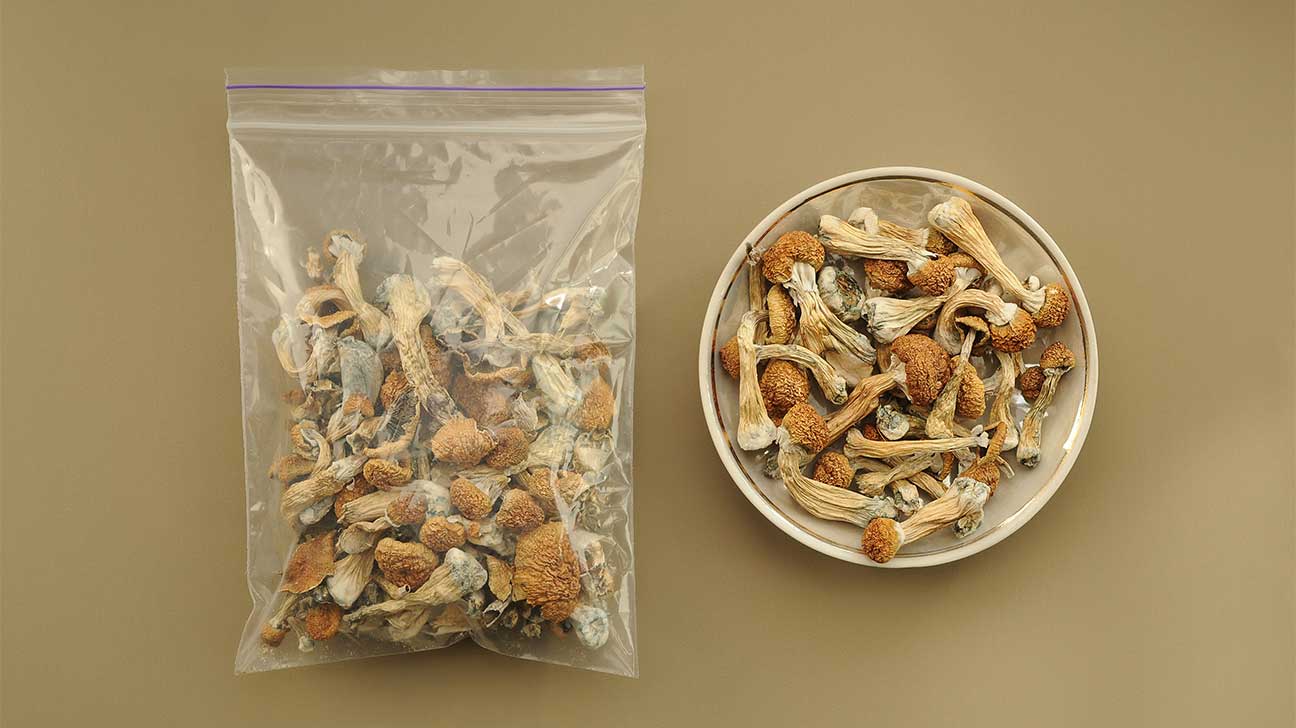
Psilocybin is a naturally occurring compound found in certain mushrooms that has hallucinogenic and psychoactive effects. It is a prodrug, meaning the body converts it into psilocin, which is chemically related to the neurotransmitter serotonin and is responsible for the hallucinogenic effects. Psilocybin is also a controlled substance in many countries, with restrictions on its use and possession, although it may be decriminalized or available for medical/scientific research.
How it works
-
- Conversion: When ingested, psilocybin is converted to psilocin by enzymes in the body.
- Mechanism: Psilocin acts as an agonist for serotonin receptors, particularly the
5−HT2A5 minus cap H cap T sub 2 cap A end-sub
5−𝐻𝑇2𝐴
receptor, which is responsible for the psychedelic experience.

- Onset and duration: Oral consumption typically leads to effects within 20-50 minutes, with peak effects around 60-90 minutes and a duration of 4-6 hours.
Common names
- Psilocybin is most famously associated with “magic mushrooms,” also known as “shrooms”.
Legal status
-
International:The United Nations Convention on Psychotropic Substances requires member nations to prohibit psilocybin, restricting it to controlled medical and scientific use.
-
National:The legal status varies by country and even within countries. Many jurisdictions have prohibited psilocybin, while others have decriminalized it or allowed for medical use.